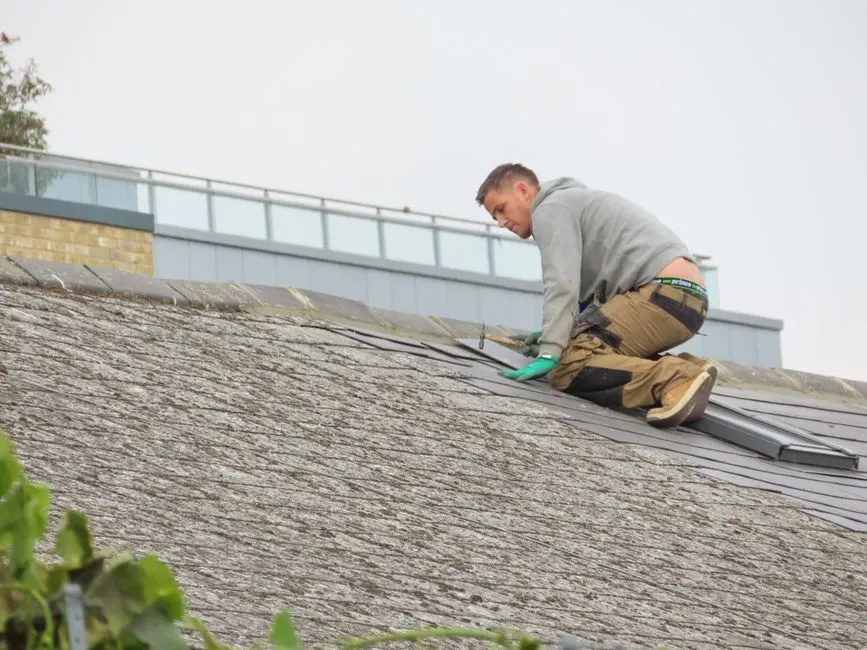
Flexible rubber membrane for the right roofs
EPDM Rubber Roofing in Corpus Christi, TX
EPDM is a synthetic rubber sheet prized for flexibility and a long, quiet service record on low-slope roofs. Its seams rely on adhesives and tapes rather than welding, which defines both where it shines and what its maintenance looks like over the decades.
Live phone supportUpfront optionsBacked workmanship
The rubber case
Why EPDM Still Earns Its Place
Decades of quiet performance on low-slope roofs come from flexibility and simplicity rather than technology.
Huge sheets, few seams
The sheet is manufactured in very large panels, so a typical residential addition may need only a seam or two, and every eliminated seam eliminates a future maintenance point. Fewer joints is a reliability argument no welded or layered system can match on small, simple roofs.
Flexibility that forgives movement
Rubber stays pliable through temperature swings and building movement that stress stiffer membranes, conforming around odd shapes, level changes, and penetrations common on older home additions and converted garages.
A dark, heat-absorbing surface
The black surface absorbs heat rather than reflecting it, which is the honest trade in this system. Over a properly insulated deck the interior effect is manageable, and owners who prioritize seam simplicity over reflectivity accept it knowingly.
Seams and adhesives
The Joints Are the Whole Ballgame
Unlike a welded membrane, an EPDM roof is only as tight as its bonded laps. Modern seam tape, applied over properly primed and cleaned rubber, forms a durable joint that has largely replaced the messy glue laps of early installations. The work is technique-sensitive: rushed surface preparation is invisible the day of installation and obvious three summers later when a lap begins to fishmouth open.
The sheet itself is remarkably durable, resisting ultraviolet exposure and ozone that crack lesser materials, and staying flexible in temperature extremes that Corpus Christi roofs cycle through between August afternoons and January cold fronts. Its vulnerabilities are mechanical: sharp dropped objects, incompatible petroleum products, and perimeter stress from shrinkage on older tight-laid installs. All three are manageable with walkway discipline, correct materials, and periodic seam inspection.
- Seam tape outperforms old glue-only laps and is the modern standard
- Sheets must rest relaxed before fastening to prevent shrinkage stress
- Primers and clean surfaces decide whether patches hold for years
- Ponding tolerance is good, but drainage correction still pays
- Ballast and adhesives each change repair access and cost
Installation outline
Installing Rubber the Way It Lasts
Relaxed sheets, clean seams, and careful edges are the three habits behind long rubber roof life.
Prepare a clean substrate
Insulation and a suitable substrate are secured, and the surface is swept completely clean, because any grit trapped under a flexible sheet eventually works through as a pinhole.
Lay and relax the sheet
The sheet is unrolled and allowed to relax fully before fastening, removing packaging tension so the membrane will not pull against its edges as it settles into service.
Build seams with tape and primer
Laps are primed and taped or bonded to specification with rollers applying firm, even pressure, and T-joints receive the extra patching detail the system requires.
Flash and finish edges
Penetrations are flashed with uncured rubber details that conform to pipes and curbs, edge metal is secured for the wind zone, and seams are inspected along their full length.
Choosing rubber
Where EPDM Beats the Alternatives
On a small, shaded addition with several penetrations and an irregular outline, rubber's flexibility and giant sheets often produce the most watertight result per dollar. On a wide-open, sun-blasted commercial slope, welded reflective membrane usually wins. The honest comparison is roof-specific, which is why the drainage and shape survey comes before any membrane recommendation.
Sparkling City Roofing, as a referral service, connects EPDM projects with local crews who install rubber regularly, and inspections with written, itemized quotes are free. The quote should state sheet thickness, seam system, and attachment method so its reliability story can be checked line by line.
- Excellent fit for shaded, cut-up residential low slopes
- Budget seam inspection as the core maintenance task
- Keep petroleum-based products off the surface entirely
- Ask for seam tape, not glue-only laps, in the quote
- Consider a compatible coating later if reflectivity becomes a goal
- Log each seam inspection with dates and photos, so gradual lap movement becomes visible between visits instead of appearing as a sudden leak
- Mark the usual service routes for other trades, so their ladders and tool bags stay off unprotected membrane
Pricing process
Pricing
$6,500 - $15,500 depending on sheet thickness, attachment method, seam system and roof size
Attachment method drives cost
Fully adhered installations price above loose-laid and ballasted approaches, and large single sheets that minimize seam count are worth their modest premium.
Seam tape vs glue pricing
Modern seam tape systems cost slightly more than basic glue work yet repay it in seam longevity, a trade the written quote should make visible.
Edge restoration on older roofs
Re-flashing pulled edges on a shrunken older roof is scoped separately from new installation, with photos documenting the stressed details.
Questions before we arrive
Frequently Asked Questions
Does a black EPDM roof make the rooms below hotter?
Black EPDM absorbs solar heat, which raises rooftop temperatures compared with a white membrane. Under an insulated assembly the difference inside the building is modest, though the membrane itself ages in a stable way under heat. Where cooling load is the priority, a reflective system or a white coating over the rubber is the usual answer instead of forcing the material choice.
Why do EPDM seams open up before the sheet wears out?
Aging seam adhesive is the classic cause. The rubber sheet itself remains flexible for decades, but glued laps can creep and open as the adhesive tires, especially where ponding water sits on the seam. Modern seam tapes have improved longevity greatly, and re-taping a seam is a standard, durable repair when the surrounding sheet is sound.
Can punctures in rubber be patched reliably?
Yes, and it is one of the material's strengths. Patches are cut from sheet stock, primed, and bonded with the same tape and adhesive system as the original seams, creating repairs that move with the roof. Properly cleaned and primed patches routinely outlast the surrounding details, provided the cause of the puncture is removed.
What does it mean when an old rubber roof shrinks?
Shrinkage is a known behavior in some older installations where the sheet was stretched tight during laying and slowly pulls as it relaxes over years. The stress shows at edges and flashing, which can pull loose. Modern practice leaves the sheet relaxed before fastening, and a repair can add perimeter slack and re-flash the stressed detail.
Can EPDM be coated later to add reflectivity?
Often yes, with an approved coating system after seams are reinforced and the surface is prepared to the coating manufacturer's specification. Coating adds reflectivity and a renewable waterproof layer while the flexible sheet keeps doing structural duty below. Compatibility must be confirmed for the specific products, because not every coating bonds to rubber.
Ready when you are
Get Your EPDM Rubber Roofing Quote
Request an itemised quote in writing: scope, materials and total confirmed before any work starts.
Talk with the local team
Request EPDM Rubber Roofing
Sparkling City Roofing, 3022 Morgan Ave, Corpus Christi, TX 78405.