Three-tab, architectural, and impact shingles explained
Asphalt Shingle Roofing in Corpus Christi, TX
Shingles remain the most common roof in Corpus Christi because they balance price, looks, and storm performance when installed correctly. The differences between three-tab, architectural, and Class 4 products matter more here than inland, where wind and salt air test every weak detail.
Live phone supportUpfront optionsBacked workmanship
The three classes
Three Shingle Classes, Three Very Different Roofs
All three look similar from the street, but their construction, wind ratings, and service lives differ sharply in Coastal Bend conditions.
Three-tab shingles
The flat, single-layer product with cutouts that mimic separate tabs. It is the lightest and cheapest option, but its wind resistance and lifespan are the weakest of the three, which is why it has largely disappeared from new coastal installs and survives mainly on older homes.
Architectural shingles
Thicker, laminated shingles with a dimensional look and much better wind ratings than three-tab. They are the default recommendation for most Corpus Christi homes because they seal more reliably, hide deck imperfections, and carry stronger manufacturer wind warranties when nailed correctly.
Class 4 impact-rated shingles
Architectural construction plus a reinforced or modified asphalt core rated for severe hail impact. They cost more per square and can help where hail history is a concern, though on this coast their tougher mat also handles foot traffic and storm debris better than standard laminates.
Installation details
Why Nailing and Sealing Matter More Than Brand
Most shingle failures after Corpus Christi storms trace back to installation rather than the product itself. Shingles nailed too high miss the double-thickness zone, so the row above is held by a single thin layer. Wind gets under a poorly sealed edge, works the tab loose, and then peels rows back in sequence during a long blow. A six-nail pattern placed in the reinforced zone, combined with starter strips that have their own sealant band at the eaves, closes the two easiest entry points for uplift.
Salt air plays a quieter role. It attacks exposed nail heads on ridge caps and cheap flashing metals long before the shingles themselves wear out, which is why fastener and flashing quality belong in every shingle quote. Granule loss also runs faster under extreme roof temperatures, so adequate attic ventilation is not an upsell on a coastal shingle roof; it is part of how the system reaches its rated life.
- Six nails per shingle in the correct zone for higher wind warranties
- Starter courses at eaves and rakes, not cut shingles used as a shortcut
- A sealed drip edge and properly lapped underlayment at every edge
- Ridge cap rated for the same wind exposure as the field shingles
- Synthetic or self-adhered underlayment chosen for the slope and exposure
How an install runs
From Tear-Off to Final Ridge Cap
A typical full shingle installation on an average Coastal Bend home follows this sequence over one to three days.
Tear off and deck inspection
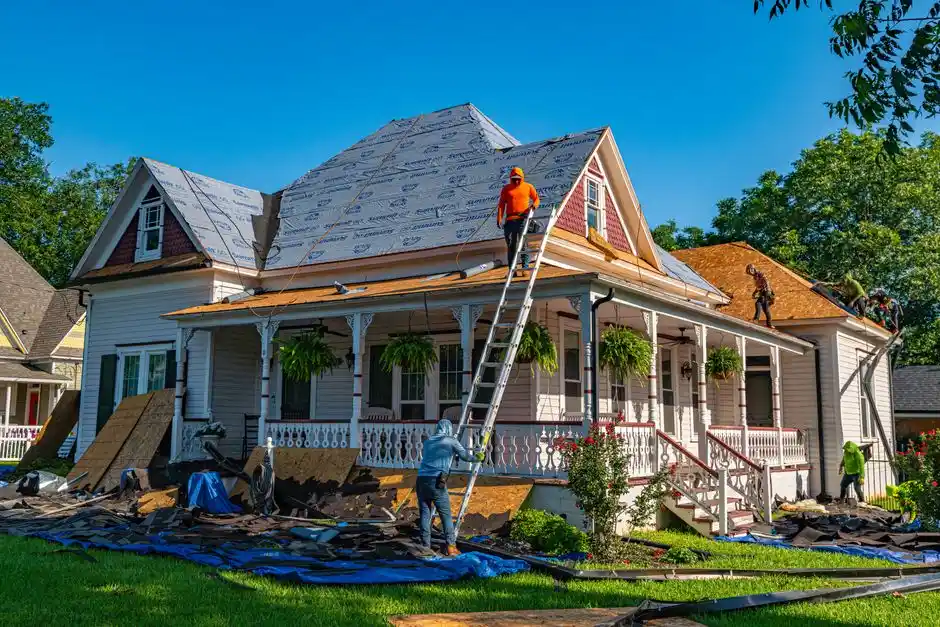
Crews strip the old layers down to the deck, inspect every sheet of decking for rot or delamination, and replace damaged sections so the new fasteners bite into solid wood across the whole roof.
Underlayment and edge metal
Underlayment goes down with self-adhered membrane at eaves, valleys, and penetrations, followed by drip edge and starter courses that seal the perimeter against wind-driven rain and uplift.
Field installation and flashing
Field shingles are laid to the manufacturer's coastal nailing pattern, valleys are woven or closed-cut as specified, and flashing at walls, chimneys, and vents is renewed rather than reused.
Ridge, ventilation, and cleanup
Ridge cap, ridge ventilation where planned, and a magnet sweep of the yard finish the job, followed by the documentation packet needed for windstorm certification and your own records.
Making the call
Which Shingle Fits a Corpus Christi Home?
For most homeowners the practical contest is architectural versus Class 4, since three-tab products rarely make sense at coastal wind exposures anymore. Architectural shingles deliver the best value per year when they are nailed and sealed to a high standard. Class 4 earns its premium where hail has hit the neighborhood before, where the roof is a long-term hold, or where an insurer gives the rating meaningful credit.
Sparkling City Roofing is a referral service, so the quote you receive names the exact product line, nail pattern, underlayment, and flashing plan rather than a vague shingle promise. Inspections and written, itemized quotes are free, which makes it easy to compare an architectural bid and an impact-rated bid on the same roof before you commit.
- Architectural shingles for most homes balancing cost and storm performance
- Class 4 products where hail history or insurer recognition justifies the upgrade
- Starter strips and six-nail patterns as non-negotiable coastal details
- Algae-resistant granules for humid streets near the bay
- A ventilation check before deciding, since heat shortens shingle life
Pricing process
Pricing
$8,500 - $18,000 depending on shingle class, roof size, pitch and tear-off
Product class drives the range
Three-tab products sit at the bottom of the range, architectural shingles in the middle, and Class 4 impact lines near the top, before decking or ventilation extras.
Impact shingles may affect premiums
Many coastal insurers recognize impact-rated products in their pricing. Ask your carrier what documentation it needs, since rules vary by policy and the discount is never guaranteed by the installer.
Tear-off and decking are separate
Tear-off layers, steepness, valley count, and replacing rotted deck boards are itemized separately in a written quote so the material price is not hiding site work.
Questions before we arrive
Frequently Asked Questions
Do Class 4 impact shingles really survive hail better here?
In most cases yes. Manufacturers rate impact products with standardized steel-ball drop tests, and the toughest class resists cracks that would split a standard shingle. On the coast the limit is wind, not hail, so the nailing pattern, sealant bond, and edge detailing decide storm performance more than the impact rating alone.
Will algae-resistant shingles stop the black streaks on my roof?
They can, particularly when the shingles use algae-resistant granules treated to stop the dark streaking common in humid Gulf air. It is a cosmetic protection rather than a structural one, and warranties typically cover streak appearance for a set number of years. Ask which granule treatment the specific product line includes rather than assuming it is standard.
Why do shingles along my eaves lift first in every storm?
Exposed fasteners are the most common cause of lifted tabs after Gulf storms, followed by shingles nailed above the manufacturer's line so the course above never bonds properly. High nailing leaves each tab held by too little and lets the sealant strip miss its target. A pre-storm inspection can catch both problems, and many edge sections can be re-secured before hurricane season.
How much granule shedding is normal on a new shingle roof, and when should I worry?
Some shedding is normal in the first few weeks after installation, as loose granules from manufacturing work off the surface and collect in gutters. It should slow sharply after the first few heavy rains. Steady heavy shedding years later, bald patches, or granules piling up long after install point to heat, hail, or age wearing the mat and deserve an inspection.
What happens if my shingle color was discontinued before a repair?
A matching repair needs the same product line, color blend, and approximate granule wear, which gets harder as the roof ages and the original line is discontinued. When an exact match is impossible, a skilled installer can weave in the closest current product and move a harvested original shingle from a hidden slope to the visible repair spot. That swap trick keeps the street-facing slope looking uniform.
Ready when you are
Get Your Asphalt Shingle Roofing Quote
Request an itemised quote in writing: scope, materials and total confirmed before any work starts.
Talk with the local team
Request Asphalt Shingle Roofing
Sparkling City Roofing, 3022 Morgan Ave, Corpus Christi, TX 78405.